

The AWAI Model for Building a Thriving “Zero-Client” Writing Business
Original price was: $197.00.$25.00Current price is: $25.00.
Proof of payment:

Unlocking Financial Freedom – The AWAI Model for Your Writing Future
The AWAI Model presents a transformative approach for writers seeking financial independence. By embracing this innovative framework, aspiring authors can turn their inherent storytelling abilities into lucrative online businesses without relying on traditional client work.
Table of Contents
Introduction to the AWAI Model for Zero-Client Writing Businesses
The rise of the digital landscape has redefined who can be considered a writer. No longer confined to working on a freelance basis, the AWAI Model offers a groundbreaking pathway for writers to develop a “zero-client” business—leveraging their innate storytelling and communication abilities to establish profitable ventures. This model not only liberates writers from the traditional time-for-money constraints of freelance work, but also enables them to create sustainable income sources that can flourish independently.
Through this model, writers can build a long-term asset that provides ongoing financial benefits, securing their future and affording them the luxury of personal freedom. The system empowers participants to navigate entrepreneurship effectively, offering them the tools and knowledge they need to transition from being service-for-hire to business owners, all while generating revenue through a variety of income streams.
Understanding the Concept of a “Zero-Client” Business
The idea of a “zero-client” business model is designed for writers who want to escape the limitations that traditional client work imposes. It revolves around the concept of crafting a self-sustaining business that generates income without the need to juggle multiple client demands or adhere to hard deadlines. For writers eager to retain creative control and pursue their passions, this alternative offers an exciting opportunity to create revenue streams that operate independently of direct client interaction.
By constructing a business around passion-led projects—such as newsletters, digital products, and membership communities—writers can establish a foundation that not only provides ongoing income but also grows in value over time. This evolving asset can later be sold, transitioning from a source of income to a potentially valuable business.
The Benefits of Building an Asset-Based Writing Business
The benefits of a zero-client writing business are compelling. One of the principal advantages is the shift from trading hours for dollars—one of the most significant frustrations that freelance writers face. By transitioning to a business model that generates income around the clock, writers can achieve true financial autonomy.
Another significant benefit is the creation of a valuable asset. Unlike freelance work, which ceases when the client engagement ends, an asset-based writing business has the potential to appreciate in value over time, offering the writer a financial windfall upon selling it. This model aligns with the aspirations of many modern writers, allowing them to carve out an independent and successful career path while pursuing their passions.
Why This Model Is Transformative for Modern Writers
The AWAI Model is transformative for modern writers precisely because it acknowledges the shifting dynamics of content creation and income generation. In a world where technology and the internet have changed the ways consumers engage with written content, the model embraces the unique capabilities that writers possess—primarily, their skills in storytelling, persuasion, and communication.
Writers can harness their knowledge and creativity to create meaningful revenue-generating activities without the burdens of client management or strict deadlines. Moreover, the model provides writers with practical steps to overcome common entrepreneurial challenges, ultimately cultivating a mindset of success and resilience as they navigate their journey as independent business owners.
Core Principles Behind the AWAI Zero-Client Approach
At the heart of the AWAI Model lies a set of core principles that guide writers towards successful entrepreneurship. By understanding and integrating these principles into their journey, writers can transition from conventional freelance work to an empowered, self-sustaining business.
Leveraging Inherent Writing and Communication Skills
Successful entrepreneurs excel at understanding their audience, crafting compelling stories, and delivering persuasive messages. Fortunately, writers are uniquely equipped with these skills, allowing them to identify their target market and communicate effectively with prospective customers. By leveraging their inherent abilities, writers can create products and services that resonate with their audience and meet their needs.
The key lies in channeling these skills into the right business strategies and initiatives. By applying the AWAI Model, writers learn how to structure their ideas, validate them, and develop effective methods to capture their audience’s attention.
Moving from Service-for-Hire to Business Ownership
The shift from being a service-for-hire writer to becoming a business owner entails a fundamental mindset change. Writers must learn to view their skills not merely as tools to be rented but as valuable assets capable of generating recurring revenue. This transition enables them to build a thriving business infrastructure that empowers creative freedom.
By embracing this new paradigm, writers can step away from dependence on clients and discover the true potential of their craft. They can undertake projects that ignite their passion while aligning with their business objectives, seamlessly combining work with personal fulfillment.
The Importance of Systems and Automation in Revenue Generation
A successful zero-client writing business hinges on building scalable systems that operate efficiently and maximize revenue potential. By leveraging automation tools and modern technology, writers can create streamlined processes for essential business functions—ranging from content creation to marketing efforts.
Employing systems allows writers to save time and focus on producing high-quality content. Furthermore, through automation, income generation becomes less labor-intensive and more consistent, enabling writers to achieve sustained revenue while eliminating the need for constant hands-on involvement.
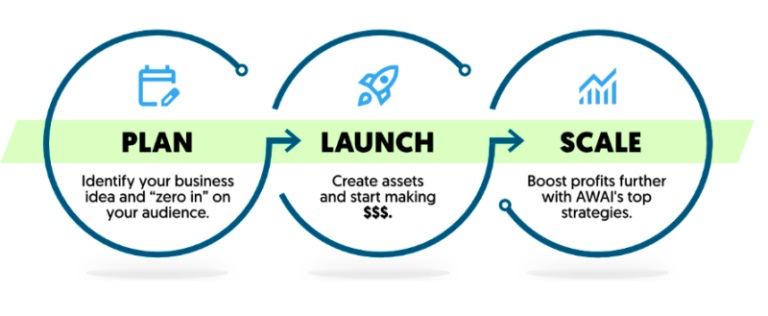
The Three-Phase Blueprint: PLAN, LAUNCH, and SCALE
The transformative nature of the AWAI Model is encapsulated in its structured three-phase blueprint, designed to help writers transition from concept to implementation. Each phase builds upon the last, guiding participants through a repeatable process of planning, launching, and scaling their writing-based business.
Phase 1: Planning — Idea Incubation and Audience Validation
In the initial phase, writers focus on identifying their passions and validating them against market demand. This critical step ensures that their ideas align with audience needs and interests.
Generating Passion-Based Ideas
The success of a zero-client writing business begins with a deep exploration of one’s passions and interests. Writers are encouraged to brainstorm and identify topics or niches that excite them and align with their strengths. Ideas generated should be authentic and reflect the unique perspective writers bring to the table.
During this creative process, it’s vital for writers to engage in self-reflection and identify what resonates most profoundly with them. Passion-based ideas have the potential to create genuine connections with audiences, paving the way for success in their writing endeavors.
Validating Market Demand and Audience Fit
Once interest areas are identified, the next step is conducting market research to evaluate their viability. Writers must investigate existing content, trends, and consumer needs to ascertain whether their ideas will resonate in the marketplace.
Audience validation is crucial as it aligns the writer’s creativity with consumer demands. By confirming that their ideas can attract a target audience willing to engage, writers can approach the launch phase with confidence and assurance of their concept’s market fit.
Phase 2: Launching — Building Assets and Initial Sales
In the second phase of the AWAI Model, writers begin developing the fundamental assets that will serve as the backbone of their business. This includes launching newsletters, building email lists, and creating websites—all essential components for generating sales and establishing a presence.
Creating Your First Money Levers: Newsletters, Email Lists, Websites
Writers will learn to set up their first money levers in this phase. Newsletters serve as powerful communication tools that allow direct interaction with readers, while email lists offer a means to cultivate deeper relationships with subscribers. Both are invaluable for nurturing leads and driving sales.
Additionally, creating a website is imperative for establishing an online presence. Writers will discover strategies for launching a professional and user-friendly site that showcases their expertise, coupled with calls-to-action guiding visitors towards taking the next steps—whether that’s signing up for a newsletter or making a purchase.
Accelerating Content Creation with Tools Like ChatGPT
With advancements in technology, writers can significantly enhance their productivity and efficiency. In this phase, writers will be introduced to tools like ChatGPT—an AI-driven content generation tool designed to help writers accelerate their content creation process by 40% to 80%.
By utilizing such tools, writers can spend less time on drafting and more time refining their messages for clarity and impact. The ability to quickly generate initial ideas or first drafts enables writers to meet deadlines and produce high-quality work without compromising creativity.
Phase 3: Scaling — Expanding Revenue Streams and Growth
The final phase of the AWAI Model focuses on scaling the business. Writers will learn how to increase their revenue streams through various avenues while positioning themselves for long-term growth.
Incorporating Ad, Affiliate Revenue, and Product Creation
Writers can explore diverse revenue models in this phase, including advertising partnerships and affiliate marketing. These methods allow writers to collaborate with other businesses and monetize content without compromising their brand.
Additionally, the creation of proprietary products—such as digital courses or eBooks—offers writers the opportunity to monetize their knowledge and expertise. Developing unique offerings that enrich the audience experience while generating income becomes a critical focus as writers prepare to scale their businesses.
Developing Memberships and Recurring Income Models
Recurring revenue models represent some of the most stable and lucrative avenues for writing businesses. Membership sites and subscription-based services allow writers to cultivate community while establishing consistent income streams.
The AWAI Model emphasizes the value of building membership communities where readers can access exclusive content, support, and engagement. Writers who implement these membership models can create long-term relationships with their audience while generating predictable income.
How to Start Writing Letters for Money
For those interested in quick financial returns, writing lucrative letters can provide an immediate avenue for generating income. Here, we explore practical steps that writers can take to leverage letters for profit.
Understanding Direct Response Writing and Its Power
Direct response writing involves creating persuasive and compelling letters that prompt the recipient to take action—be it making a purchase, signing up for a service, or engaging with a brand. The power of this form of writing lies in its ability to evoke emotional responses and elicit immediate responses from readers.
Writers must craft engaging narratives that not only inform but also inspire action. Understanding the psychology behind effective communication enhances their ability to connect with audiences on a deeper level, ultimately leading to higher conversion rates.
Crafting Persuasive and Effective Sales Letters
To write compelling sales letters, writers should focus on understanding their audience’s wants and addressing their pain points. A well-structured sales letter includes critical elements such as attention-grabbing headlines, storytelling, benefits-oriented content, and a strong call to action.
Research similar successful sales letters can inform writers’ approaches, helping them identify effective strategies and formats. Testing different messaging components will also lead to optimizing performance, maximizing the potential to generate sales.
Building an Email List as a Long-Term Asset
An email list is one of the most valuable assets a writer can build. Engaging an audience through email allows for direct communication, and contributes to establishing trust and rapport with subscribers.
Writers can offer incentives for list sign-ups—such as free resources, exclusive content, or discounts—to quickly grow their email list. As it expands, writers can nurture the relationship with continued valuable content and promotions that encourage conversion.
Practical Steps to Write and Test Performance-Driven Letters
When writing performance-driven letters, it’s essential to track and analyze response rates and engagement levels. Utilizing A/B testing can reveal what messaging resonates most with audiences and yield the best results.
Feedback and performance metrics allow writers to refine their approach continually, ensuring greater effectiveness in delivering compelling letters that lead to income generation.
How to Begin Writing a Book and Monetize It
Writing a book can serve as both a personal achievement and lucrative income source. To transform your book project into a monetized venture, writers must approach the writing process strategically.
Identifying Your Niche and Target Audience
Before embarking on the journey of writing a book, it’s crucial to identify a specific niche that captures both the writer’s passion and the interests of a target audience. Researching current literature and consumer trends informs the direction a book should take.
By framing the book’s central theme and identifying the target readership, writers can tailor their content to provide maximum value and engagement, ensuring the book resonates with its intended audience.
Structuring Your Book for Maximum Impact and Readability
A well-structured book enhances the reading experience, making content digestible and engaging. Writers should focus on creating an outline that flows logically and captures readers’ interest from the beginning through to the conclusion.
Additionally, understanding how to divide chapters effectively and utilize chapter headings can aid in maintaining reader engagement. Incorporating elements such as stories, case studies, or relatable anecdotes can further enrich the narrative, enhancing overall impact.
Publishing Options: Traditional vs. Self-Publishing
Writers often face the decision of whether to pursue traditional publishing avenues or self-publishing options. Each path carries its pros and cons. Traditional publishing often provides broader exposure but can be competitive and challenging to navigate.
Conversely, self-publishing offers greater control and speed but requires writers to take on responsibilities related to marketing and distribution. Understanding these distinctions helps writers choose the most suitable pathway for their goals and circumstances.
Creating Additional Revenue From Your Book Through Courses, Downloads, and Memberships
Books can serve as a foundation for generating various revenue streams. By creating complementary materials—such as online courses, downloadable worksheets, or membership communities—writers can maximize the opportunities for income generation alongside their written work.
Leveraging the audience cultivated through the book can open doors for additional monetization efforts. Writers who connect with readers through multiple platforms can amplify their business potential and drive consistent sales.
Strategies to Make Money Writing
Making a living as a writer requires forward-thinking strategies that maximize earning potential while supporting continuous growth. Below are avenues writers can explore to diversify their income streams.
Diversifying Income with Multiple Revenue Streams
A successful writing career thrives on the ability to generate income from various sources. Writers should consider different opportunities, including articles, eBooks, consulting, speaking engagements, and digital content creation.
By implementing a diversified income strategy, writers can protect themselves against market fluctuations and unpredictability. Embracing multiple avenues fosters resilience and steady cash flow.
Building and Growing an Email List for Consistent Sales
An email list acts as the writer’s direct link to their audience. Focusing on nurturing and expanding this resource provides writers with consistent avenues for promoting products and services.
Establishing regular communication through newsletters, promotional campaigns, and value-driven content keeps audiences engaged and interested, ultimately translating to consistent sales. Regularly offering exclusive deals or valuable content can also help retain subscriber interest.
Developing Digital Products and Online Courses
Digital products, such as eBooks, templates, or resources, present profitable avenues for writers beyond traditional writing. Creating online courses based on expertise can also lead to substantial revenue streams.
Writers can package their knowledge in engaging and versatile formats that cater to audience needs. By meeting various learning styles and preferences, these products can resonate deeply with consumers, driving sales.
Using Affiliate Marketing and Advertising to Increase Earnings
Incorporating affiliate marketing into writing businesses can serve as an effective method for generating passive income. Writers can promote relevant products and services that align with their audience’s interests, earning commissions on successful referrals.
The strategic placement of advertising—such as banner ads or sponsored content—on websites or in newsletters can also provide additional revenue, enabling writers to diversify their income further.
Selling the Entire Business or Asset in the Future
For entrepreneurial writers, the long-term vision of building an asset-based business includes the potential of selling the entire venture one day. A well-structured, profitable writing business can be an attractive asset for buyers looking to enter the market.
Understanding the principles behind valuing a business can provide writers with actionable insights into how they can grow their enterprise in preparation for a future sale, amplifying their financial opportunities.
Support Systems and Tools for Zero-Client Success
Establishing a writing business can be daunting, but with appropriate support systems in place, writers can navigate challenges and achieve success.
Community and Accountability Platforms
Tapping into community-driven platforms and accountability spaces allows writers to connect with like-minded peers who understand their journey. Finding support from others facing similar challenges can motivate perseverance and growth.
Through networking opportunities and shared resources, writers can learn from each other’s experiences and gain invaluable insights that fuel their entrepreneurial journeys.
Expert Validation and Coaching Sessions
Working with mentors or receiving feedback from industry experts can provide writers with guidance and validation on their ideas. Access to coaching sessions can help writers refine their strategies and accelerate their path to success, as they learn to avoid common pitfalls and harness best practices.
Investing in mentorship can be a game-changer for writers—offering clarity, inspiration, and actionable advice as they embark on their zero-client business journey.
Recommended Tools and Software for Website, Email, and Content Creation
Modern writers can leverage an array of tools and software tailored to enhance productivity and streamline various business processes. Platforms for website development, email marketing, and content creation play pivotal roles in establishing a professional presence.
Researching user reviews and recommendations provides writers with insights into the best options available. Equipping themselves with the right tools is an essential step toward ensuring a successful zero-client writing business.
Partnering with AWAI for Promotion and Exposure
Joining the AWAI Model creates unique opportunities for writers to partner with a well-established network. Through this promotional partnership, participants gain exposure to a vast audience, fostering initial momentum for newly launched businesses.
This supportive framework amplifies marketing efforts, allowing writers to focus on building their businesses with confidence, knowing they have a strong backing.
Real-Life Success Stories and Market Examples
Exploring real-life success stories can inspire aspiring writers, demonstrating the viability of the AWAI Model in achieving financial independence.
Case Studies of Writers Who Achieved Financial Independence
Numerous individuals have successfully transformed their writing passions into thriving businesses through the AWAI Model. By sharing their experiences and the steps they took to succeed, aspiring writers can learn valuable lessons.
Such case studies can provide insights into various niches, strategies, and approaches employed by successful writers, showcasing diverse paths to achieving financial security.
Saleable Online Business Examples and Valuations
Highlighting examples of salable online businesses gives writers practical references for understanding the value of their assets. Successful online ventures often incorporate multiple revenue streams, showcasing the potential yield of a well-structured business model.
By studying valuations and sales processes, aspiring writers can better assess the market dynamics and recognize their writing-based businesses as viable investments.
Lessons Learned From Successful Zero-Client Entrepreneurs
The journey to entrepreneurship is often fraught with challenges, but experienced entrepreneurs can offer valuable takeaways. Analyzing lessons learned from successful zero-client entrepreneurs provides insights into building resilience, developing strategic thinking, and avoiding common pitfalls.
These lessons can significantly shape aspiring writers’ approaches, empowering them to embrace the entrepreneurial mindset essential for navigating their chosen paths.
Conclusion: Embarking on Your Zero-Client Writing Journey
Embarking on the zero-client writing journey through the AWAI Model opens the door to financial autonomy and creative fulfillment. By transitioning from service-based work to the ownership of an asset-based business, writers can reclaim control of their time, energy, and financial future. With the right mindset and strategies in place, aspiring authors can navigate entrepreneurship confidently, supported by a robust community, mentorship, and practical tools. The process may be challenging, but the long-term rewards in freedom, profit, and personal satisfaction are well worth the investment of time and effort.
Sales Page: _https://www.awai.com/p/is/ipr/
Related products